Topic #8 Weekly Reflection – Computational Thinking
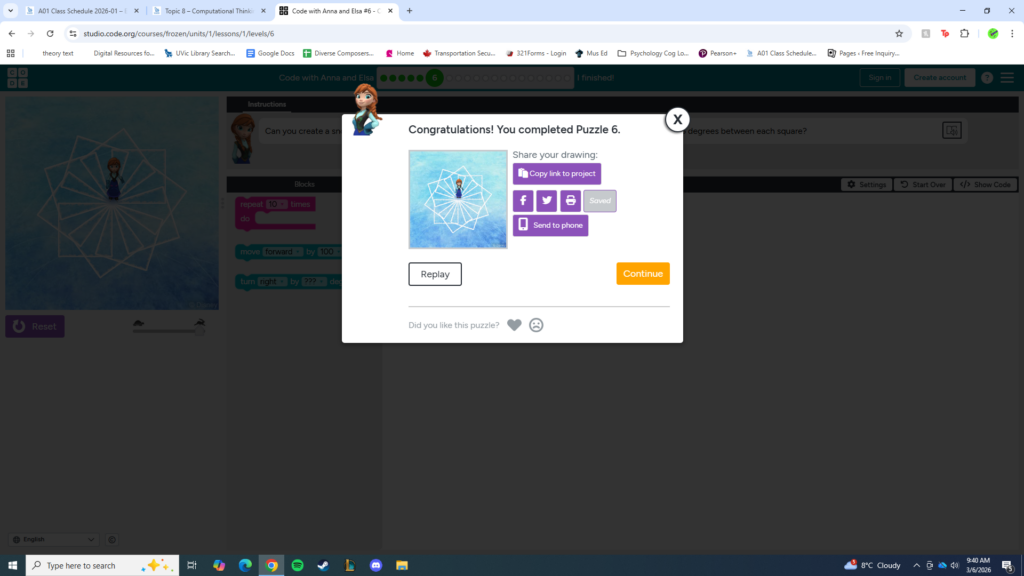
This is how far I got into the Elsa coding. I enjoyed the block coding, and it was very accessible and easy to start.
Coding and Computational Thinking in Music
I think that computational thinking can be applied to two main things in music: rehearsal and practice. In a rehearsal, the music teacher needs to use the four stages (decomposition, pattern recognition, abstraction, and algorithms) to learn a piece efficiently. The conductor starts by identifying problems that may occur, learning the layout of the piece, understanding what material is the same as what has already been played, identifying the key sections, and designing a step-by-step rehearsal process. Doing this process is called “score studying” and all music teachers must score study for every piece that they play with students. For practicing, students can be taught these steps so that when they practice alone, they are using a system to make it more efficient.
Gaming in Music
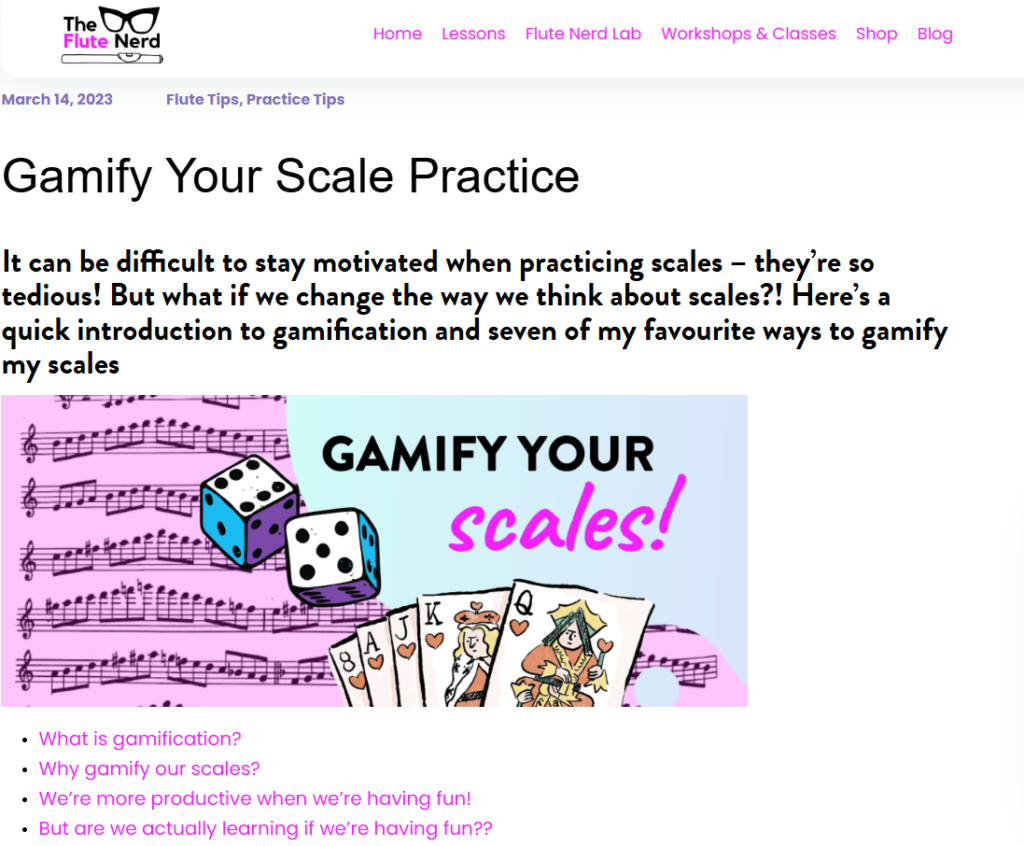
It can be tough to connect gaming to music because music is already an elective that most people choose because they enjoy it or find it fun. However, almost no high school students find practicing at home fun despite it being vital to their instrumental progress. This is where gameifying practice can come in handy! Here is a website that lists seven different ways to make practicing scales fun, but the simplest one is to add an element of competition. Music teachers need to get creative with little ways to make things seem more fun and more like a game to reap the many benefits of gaming in education.